The proof
Proof. Not theory.
For more than five decades, Harris Kern built his life around discipline, execution, and personal responsibility. He did not have a college degree, financial backing, or formal life-coaching certifications. What he did have was decades of firsthand experience. Rather than teaching discipline as an academic concept, he built his own life around the principles he eventually taught others.
The record
Every number below was earned before it was taught.
16
First car. Paid cash.
A one-year-old vehicle, bought with lunch money he saved instead of spent and weekends he worked instead of played.
18
Entry-level data processing at GTE Lenkurt.
San Carlos, California. No degree. No connections. Advanced into management in his twenties.
19
First home. $65,000.
Westborough, California, 1973. Sold two years later for $90,000 and rolled into a larger home in Foster City.
21
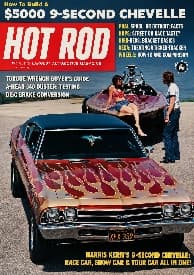
Cover of HOT ROD Magazine.
July 1975. His customized Chevelle and speed boat, both Best of Show winners at major California custom shows.
30s
Director of IT at Gould Inc., then Sun Microsystems.
Rose through senior technology leadership to Vice President and Executive Vice President.
38
Financially independent.
Control expenses, increase income, save aggressively, build assets instead of lifestyle. Started as a teenager. Results followed for decades.
40s
Bestseller, then a publishing institute.
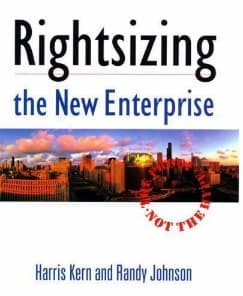
Rightsizing the New Enterprise: The Proof, Not the Hype became a Prentice Hall bestseller and led to Harris Kern's Enterprise Computing Institute.
Now
50+ books. 9 homes, no mortgages. Full-time mentor.
Seven rental properties and two personal homes in Texas and Florida. Life coach, real estate investor, publisher, and consultant.
Financial discipline
He trained his mind to be frugal and save.
Instead of spending money on lunch every day, he saved it. Instead of spending weekends with friends, he worked and saved more. Instead of eating out, he found ways to avoid the expense.
This was not about deprivation. It was about training himself to delay short-term gratification in order to achieve something more important. That mindset stayed with him: control expenses, increase income, save aggressively, build assets rather than lifestyle.
The discipline started as a teenager. The results followed for decades.
HKECI publishing royalties
~$125K / yr
Tens of thousands of books sold to IT professionals worldwide, on top of corporate pay.
Self-help publishing
$60K to $85K / yr
Written in airports and on airplanes between customer visits. Not sponsored by Sun.
Consulting firm, year one
~$800K
People. Processes. Technology. Leadership mentoring for Fortune 500 and Global 2000 IT organizations.
Sun hardware and software sales influenced
Tens of millions
Organizations he educated then needed technology to build the infrastructures he taught.

Corporate career
From GTE to Executive Vice President at Sun.
Harris began at 18 with GTE Lenkurt in data processing, advanced into management in his twenties, and was recruited by Gould Inc. in Silicon Valley as Director of IT. He then joined Sun Microsystems, progressing through increasingly senior technology leadership roles to Vice President and Executive Vice President.
While assessing hundreds of organizations around the world for Sun, he kept seeing the same thing: technology was rarely the biggest problem. People and processes were. Better technology could not compensate for ineffective people and broken processes.
Build better organizations by starting with better people.
Publishing
A bestseller that became a business platform.
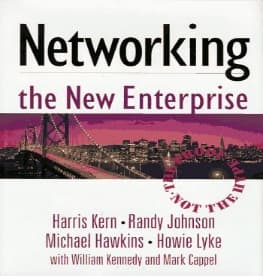
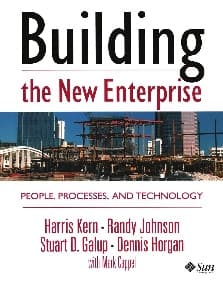
His first major book, Rightsizing the New Enterprise: The Proof, Not the Hype, was published by Prentice Hall and became a bestseller. After weeks of negotiation he secured a much larger arrangement and established Harris Kern's Enterprise Computing Institute, bringing together the industry's leading minds to publish practical how-to books for enterprise IT.
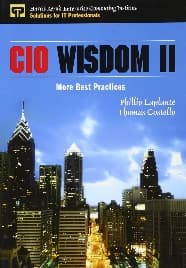
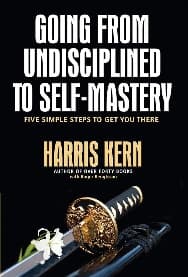
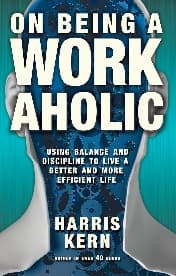
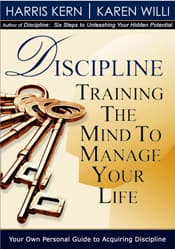
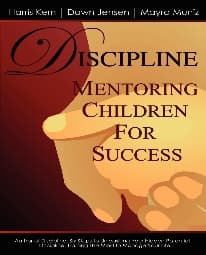
Then the writing turned toward the human side of performance: self-discipline, priorities, productivity, execution, and personal transformation. Written between customer visits, in airport terminals, and on long flights. More than 50 books in total.





Today
His credentials are not certificates on a wall.
Today Harris works as a life coach, real estate investor, publisher, and consultant, helping people apply practical discipline to financials, health, and relationships: procrastination, time management, priorities, goal management, focus, execution, and accountability. He spent decades proving his principles on himself before making a full-time profession of helping others apply them.
They are five decades of firsthand experience and results.
The approach
01
Design the strategy
02
Abide by the principles
03
Set the priorities
04
Build the structure
05
Train the mind
06
Execute consistently
07
Measure the results
08
Adjust when necessary
09
Keep moving